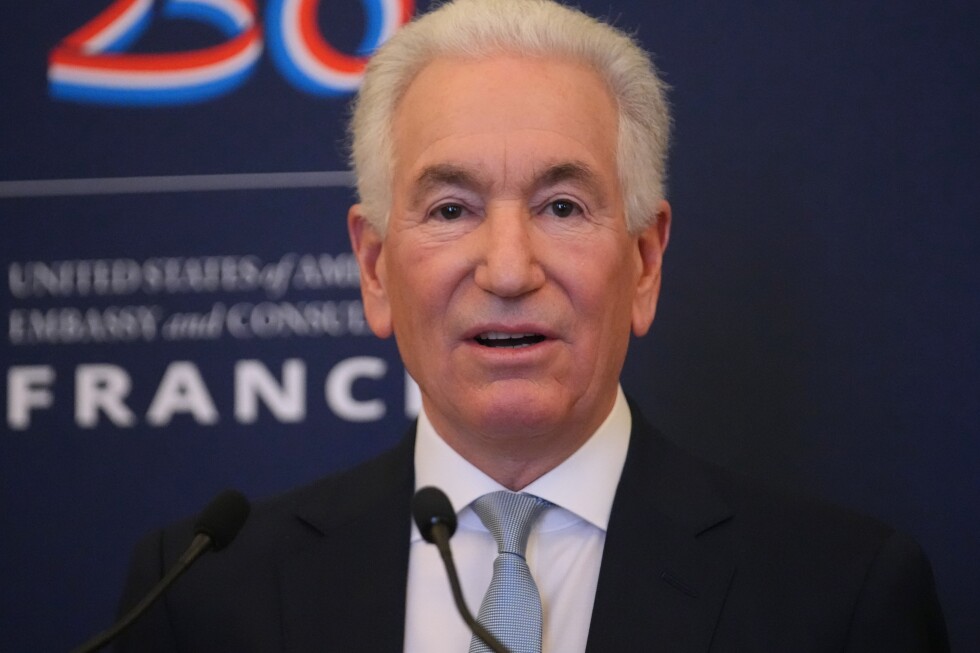
France Curbs US Envoy Kushner's Access Over Skipped Summons: A Diplomatic Quagmire
A significant diplomatic rift emerged between France and the United States when French authorities curtailed US Ambassador Charles Kushner's access to government ministers. The unprecedented move came after the ambassador failed to appear for a formal summons issued by the French Foreign Ministry. This incident cast a spotlight on the delicate balance of international relations, the sanctity of diplomatic protocol, and the impact of domestic political rhetoric on bilateral ties between the two long-standing allies. The episode underscored the gravity with which nations guard their sovereignty, especially when perceived external interference touches upon sensitive internal matters.
The Diplomatic Fallout: France Restricts US Envoy Kushner's Access
The catalyst for the diplomatic censure was a series of comments made by the Trump administration regarding a tragic event in France, followed by Ambassador Kushner's non-appearance at a crucial meeting. According to the French Foreign Ministry, Ambassador Charles Kushner "did not appear" after being formally summoned to discuss the remarks. In response, Foreign Minister Jean-Noël Barrot swiftly requested that Kushner no longer be granted direct access to members of the French government.
While not a complete expulsion, this restriction significantly hampered the ambassador's ability to perform a core function of his role: direct engagement with high-level officials. The ministry clarified that Kushner would still be permitted to conduct other diplomatic duties and have "certain exchanges" with officials, but the direct, unfiltered access vital for effective diplomacy was revoked. The French diplomatic source, speaking to Reuters, emphasized that the summons was issued after the US embassy published "comments on a tragedy that occurred in France and concerns only our national public debate – which we refuse to allow to be exploited." The absence was a direct affront to French diplomatic expectations, leading to an immediate and firm response. Ambassador Kushner, whose son Jared Kushner is married to Donald Trump's daughter Ivanka, reportedly sent a senior embassy official in his place, citing personal commitments – an excuse that was evidently not accepted by the French authorities.
A National Tragedy Ignites International Spat
The specific tragedy that ignited this international spat was the death of Quentin Deranque, a 23-year-old far-right activist, in Lyon on February 14. Deranque succumbed to head injuries following violent clashes between far-right and hard-left supporters during a protest. The incident led to preliminary charges against six men suspected of involvement in the fatal assault, with a parliamentary assistant to a left-wing lawmaker also charged with complicity.
The sensitivity surrounding this event was amplified when members of the Trump administration publicly weighed in. Sarah Rogers, the US State Department undersecretary for public diplomacy, specifically condemned the role of "violent radical leftism" in the case and stated that Deranque's killing showed "why we treat political violence – terrorism – so harshly." These comments, reposted by the US embassy in Paris, were perceived by France as an inappropriate and unwelcome intervention in its domestic affairs. For France, a sovereign nation with a robust legal system, such external pronouncements on a ongoing criminal investigation and deeply divisive national debate were seen as an attempt to exploit the situation for political purposes, thereby violating the fundamental principles of respect and non-interference in another country's internal affairs.
Understanding Diplomatic Protocol and Its Breaches
At the heart of this incident lies a fundamental misunderstanding or disregard for established diplomatic protocol. A formal summons from a host nation's foreign ministry to an ambassador is a serious diplomatic tool, typically reserved for moments of grave concern or displeasure. It is not merely an invitation but a directive, a clear signal that the host government expects the ambassador to personally account for an issue.
The role of an ambassador is multifaceted: to represent their country's interests, to foster goodwill, to facilitate communication, and to navigate complex bilateral relations. Part of this role inherently involves understanding and respecting the host nation's customs, sovereignty, and diplomatic norms. Skipping a formal summons, especially one concerning sensitive domestic issues and a perceived overreach of commentary, is widely considered a significant breach of etiquette and a direct slight. It suggests a lack of respect for the host country's authority and its diplomatic processes.
Practical Insights into Diplomatic Conduct:
*
Respect Sovereignty: Foreign governments and their representatives must refrain from commenting on another nation's internal legal processes or highly sensitive domestic political issues.
*
Adhere to Protocol: A formal summons is a serious matter. An ambassador's personal attendance is usually mandatory, unless extenuating circumstances are mutually agreed upon. Sending a junior delegate in such a situation can be perceived as disrespectful.
*
Bridge-Building, Not Meddling: The core function of an ambassador is to build bridges, not to inflame tensions or interfere with domestic narratives.
*
Understanding Nuance: Diplomatic communication often relies on subtle cues and established norms. Misreading or ignoring these can have significant consequences.
This incident serves as a stark reminder that even between the closest allies, the rules of engagement must be meticulously observed to prevent avoidable friction.
Navigating US-France Relations: A History of "Irritants"
The relationship between the United States and France is often described as one of the oldest and most enduring alliances, spanning over 250 years. Yet, this long history is also punctuated by moments of tension and "irritants," as the French Foreign Ministry itself acknowledged. From differences over the Iraq War in the early 2000s to more recent disagreements, such as the AUKUS submarine deal that blindsided France, the transatlantic partnership, while robust, is not immune to strain.
The incident with Ambassador Kushner highlights how political alignments and personal styles of leadership can influence diplomatic interactions. The Trump administration's "America First" approach and willingness to openly comment on international and even domestic affairs of other nations often clashed with traditional diplomatic norms and the sensibilities of European allies like France. This particular spat, rooted in perceived interference in a French national debate and an ambassador's failure to respect protocol, underscores the potential for rapid escalation when these lines are crossed.
Despite the firm stance, the French ministry left the door open for reconciliation, stating, "It remains, of course, possible for Ambassador Charles Kushner to carry out his duties and present himself at the Quai d’Orsay, so that we may hold the diplomatic discussions needed to smooth over the irritants that can inevitably arise in a friendship spanning 250 years." This statement reflects the inherent value both nations place on their relationship, indicating a desire to manage the current "irritant" rather than allowing it to cause lasting damage. It emphasizes the French expectation for personal accountability from the US envoy to restore trust and facilitate ongoing dialogue. To delve deeper into the implications of this event, you can read more about the
Diplomatic Fallout: France Restricts US Envoy Kushner's Government Access and the broader context of the
US-France Spat: Trump Remarks & Ambassador Kushner's Curtailed Access.
In conclusion, the decision by France to curtail US Ambassador Charles Kushner's access over a skipped summons and contentious remarks by the Trump administration serves as a powerful reminder of the enduring importance of diplomatic protocol and mutual respect between sovereign nations. While the bonds between France and the United States are deep and historically significant, even the closest alliances require careful navigation and adherence to established norms to prevent temporary "irritants" from evolving into more substantial rifts. The incident underscores the principle that domestic rhetoric, when amplified by official diplomatic channels, can have tangible and immediate consequences on international relations, necessitating ambassadors to be acutely aware of the sensitivities they are entrusted to manage.