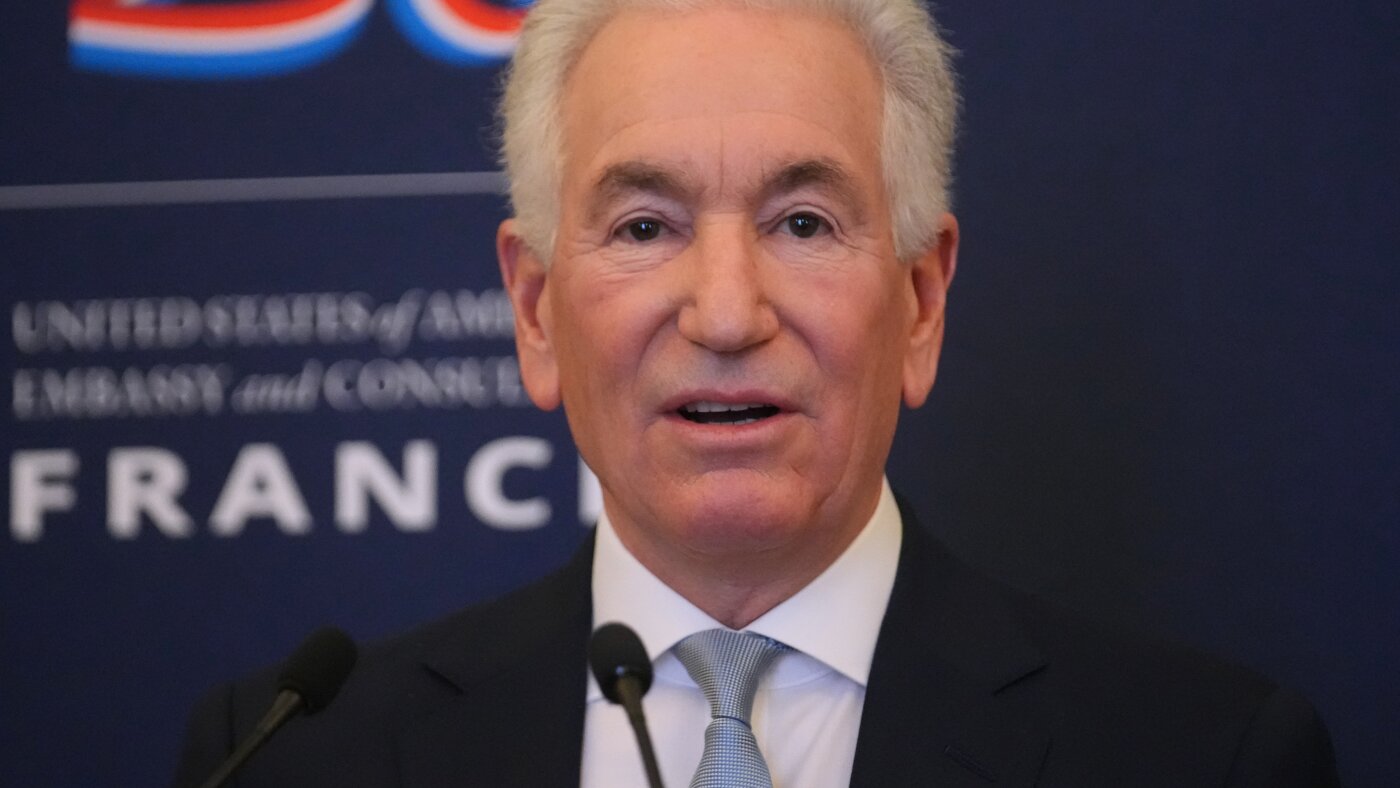
US-France Spat: Trump Remarks & Ambassador Kushner's Curtailed Access Ignites Diplomatic Firestorm
A diplomatic storm recently engulfed the historically robust relationship between the United States and France, sparked by controversial remarks from the Trump administration regarding a domestic French incident and further exacerbated by the conduct of the US Ambassador to France, Charles Kushner. This incident led to France taking the rare step of curtailing the ambassador’s direct access to government ministers, signaling a significant — albeit potentially temporary — chill in bilateral relations. For anyone following international diplomacy, this episode highlights the delicate balance of sovereignty, protocol, and the profound impact of words, particularly when delivered from a global stage. The role of the
france us ambassador, traditionally one of fostering deep ties, suddenly found itself at the heart of an escalating transatlantic disagreement.
The Spark: Trump Administration's Controversial Remarks on a French Tragedy
The roots of this diplomatic tension trace back to comments made by members of the Trump administration following the tragic death of Quentin Deranque, a 23-year-old far-right activist, in Lyon. Deranque died from head injuries after clashes between far-right and hard-left supporters during a demonstration. Six individuals have since faced preliminary charges in connection with his death, along with a parliamentary assistant to a left-wing lawmaker charged with complicity. While a somber internal affair for France, the US administration, specifically through comments from Sarah Rogers, the US State Department undersecretary for public diplomacy, chose to weigh in. Rogers condemned the role of "violent radical leftism" and equated Deranque's killing with "terrorism," suggesting that deciding "to kill people for their opinions instead of persuade them" was an abandonment of democratic principles.
These remarks, amplified by the US embassy in Paris reposting them, struck a raw nerve in France. The French Foreign Ministry viewed the comments as an unwarranted intrusion into their national public debate and a clear attempt to exploit a domestic tragedy for political purposes. For France, such interventions are not merely opinions; they infringe upon national sovereignty and disrespect the judicial process underway. The underlying message from Paris was unequivocal: France handles its own internal affairs, and external commentary, particularly that which frames a complex incident through a partisan lens, is unacceptable. This immediate and public reaction underscores the profound importance nations place on the sanctity of their domestic discourse and their right to manage internal challenges without perceived foreign interference.
Ambassador Kushner's Non-Appearance and France's Swift Response
The situation escalated dramatically when the French Foreign Ministry, led by Minister Jean-Noël Barrot, formally summoned US Ambassador Charles Kushner to discuss the contentious US remarks. A diplomatic summons is a serious affair, signifying a host nation's deep displeasure and demanding an official explanation or clarification from the ambassador as the direct representative of their government. However, Ambassador Kushner "did not appear" at the scheduled meeting. Instead, he sent a senior official from the embassy in his place, citing personal commitments. This decision, or perceived snub, was the critical turning point that propelled the spat from a war of words to concrete diplomatic action.
France viewed Kushner's non-appearance not just as an insult to diplomatic protocol but as a "failure to grasp the basic requirements of the ambassadorial mission and the honour of representing one's country." In response, Foreign Minister Barrot swiftly requested that Ambassador Kushner no longer be allowed direct access to members of the French government. This move effectively curtails his ability to engage directly with high-ranking officials, ministers, and other key decision-makers, a cornerstone of an ambassador's influence and effectiveness. While Kushner is still permitted to perform other diplomatic duties and engage in "certain exchanges" with officials, the removal of direct access significantly hampers his capacity to conduct sensitive negotiations, lobby on behalf of US interests, or smoothly navigate the intricacies of French political life. This diplomatic curtailment sends a strong message: respect for protocol and a willingness to engage directly are non-negotiable foundations of international relations. The incident became a focal point for media outlets, leading to headlines like
France Curbs US Envoy Kushner's Access Over Skipped Summons, highlighting the severity of the French reaction.
The Nuances of Diplomatic Protocol and the Role of a France US Ambassador
Diplomatic protocol isn't merely a set of archaic rules; it's the operational language of international relations, designed to facilitate communication, prevent misunderstandings, and maintain respectful interactions between sovereign states. An ambassador, as the highest-ranking diplomatic representative, embodies their nation’s sovereign presence in the host country. Their actions, or inactions, are seen as direct reflections of their government's intentions and respect (or lack thereof) for the host nation.
When a
france us ambassador is formally summoned, it is an expectation, indeed a requirement, that they personally attend. Sending a subordinate, especially for an issue deemed highly sensitive by the host, can be interpreted as dismissive and disrespectful. Such actions can inadvertently imply that the ambassador, or their government, does not take the host country's concerns seriously. The decision by France to restrict direct access to government ministers is a powerful symbolic and practical rebuke. Symbolically, it demonstrates French resolve and its unwillingness to tolerate perceived slights to its sovereignty or diplomatic etiquette. Practically, it complicates the ambassador's mission, forcing communications through less direct, often more bureaucratic channels, thus reducing efficiency and potentially diminishing the US's diplomatic leverage in France. This incident serves as a stark reminder that even between long-standing allies, a failure to adhere to established protocols can have immediate and tangible consequences, impacting the very core of bilateral engagement, a situation elaborated in articles like
Diplomatic Fallout: France Restricts US Envoy Kushner's Government Access.
Navigating Bilateral Tensions: Paths Forward and Broader Context
Despite the immediate friction, the door for reconciliation remains open, as explicitly stated by the French Foreign Ministry. Their statement noted that "It remains, of course, possible for Ambassador Charles Kushner to carry out his duties and present himself at the Quai d’Orsay, so that we may hold the diplomatic discussions needed to smooth over the irritants that can inevitably arise in a friendship spanning 250 years." This olive branch indicates France's desire to move past the incident, provided the appropriate diplomatic gestures are made. The onus now rests on Ambassador Kushner and the US administration to de-escalate the situation through adherence to diplomatic norms. A personal appearance by the ambassador, coupled with perhaps a clarification or regret regarding the initial comments, could go a long way in mending fences.
The US-France relationship is one of the oldest and most strategically vital alliances, stretching back over two and a half centuries. It encompasses deep cooperation on defense, trade, culture, and global challenges. While this recent spat represents a significant bump in the road, it's crucial to view it within the broader context of a resilient partnership that has weathered numerous disagreements over generations. The challenge for both nations is to ensure that short-term political rhetoric and diplomatic missteps do not cause irreparable damage to an alliance critical for global stability. Respect for sovereignty, clear communication, and a commitment to established diplomatic channels are paramount in ensuring that even amidst "irritants," the fundamental friendship endures and thrives.
Conclusion
The diplomatic row between the US and France, centered on the Trump administration's comments and Ambassador Charles Kushner's actions, underscores the enduring importance of diplomatic protocol and mutual respect in international relations. While the remarks themselves touched on a sensitive internal French issue, the ambassador's decision to bypass a formal summons was the catalyst for France's decisive response. The curtailment of direct access to French government ministers is a stark reminder that diplomatic engagement relies not just on policy alignment but also on the meticulous observance of etiquette and sovereignty. As two nations with a profound shared history, the path to fully restoring diplomatic ease lies in acknowledging and addressing these foundational principles, ensuring that the critical role of the
france us ambassador can once again be one of unequivocal partnership and productive dialogue.